Offices & professional spaces
Reception areas, meeting rooms, desks and shared facilities have different patterns of use. We agree on access, desk handling, recurring tasks and detail work so the cleaning supports your working day.
Commercial cleaning in Cleveland, backed by a dedicated area manager, clear checklists and regular inspections.
Let’s walk your facility See how we work ↓
Clean Facility has a team and active cleaning engagements in Cleveland. We work with facility managers and business owners who need the routine work completed, issues followed up, and a clear record of what their cleaning contract covers.
Your building sets the requirements. We start with the spaces you use, the hours you operate and the tasks that matter. Then we turn those requirements into a scope, a working checklist and an inspection process.
For businesses with more than one site, our Cleveland work connects to a wider Ohio operation. Each facility keeps its own cleaning plan, with coordination across the account.
A task list is only useful when it says where, how often and who is responsible. Your proposal should answer all three.
| Area or service | Work to define in your scope | Decisions made at the walkthrough |
|---|---|---|
| Entrances & shared spaces | Floor care, glass, trash removal and agreed surface cleaning. | Visitor traffic, entry conditions and the frequency each area needs. |
| Offices & workstations | Vacuuming or mopping, trash removal and agreed dusting or touchpoint work. | Desk-clearing expectations, private-office access and surfaces to leave undisturbed. |
| Restrooms | Fixtures, sinks, mirrors, floors, trash and consumable restocking. | Use levels, stock locations and who purchases paper products, liners and soap. |
| Breakrooms & kitchens | Floors, counters, sinks, trash and agreed appliance-exterior cleaning. | Interior appliance cleaning and dish handling, where requested, as explicit additions. |
| Day porter support | Agreed daytime tasks and attention to busy shared spaces. | Coverage hours, task priorities and how requests are routed during the day. |
| Floor care & project work | Carpet cleaning, periodic floor work and other agreed specialty tasks. | Surface type, equipment requirements, service windows and separate project scope. |
Our service checklist separates routine work, added detail work and special requests. We use it to make the differences clear. Your final scope identifies the tasks and frequency for your facility, including any areas excluded from service.
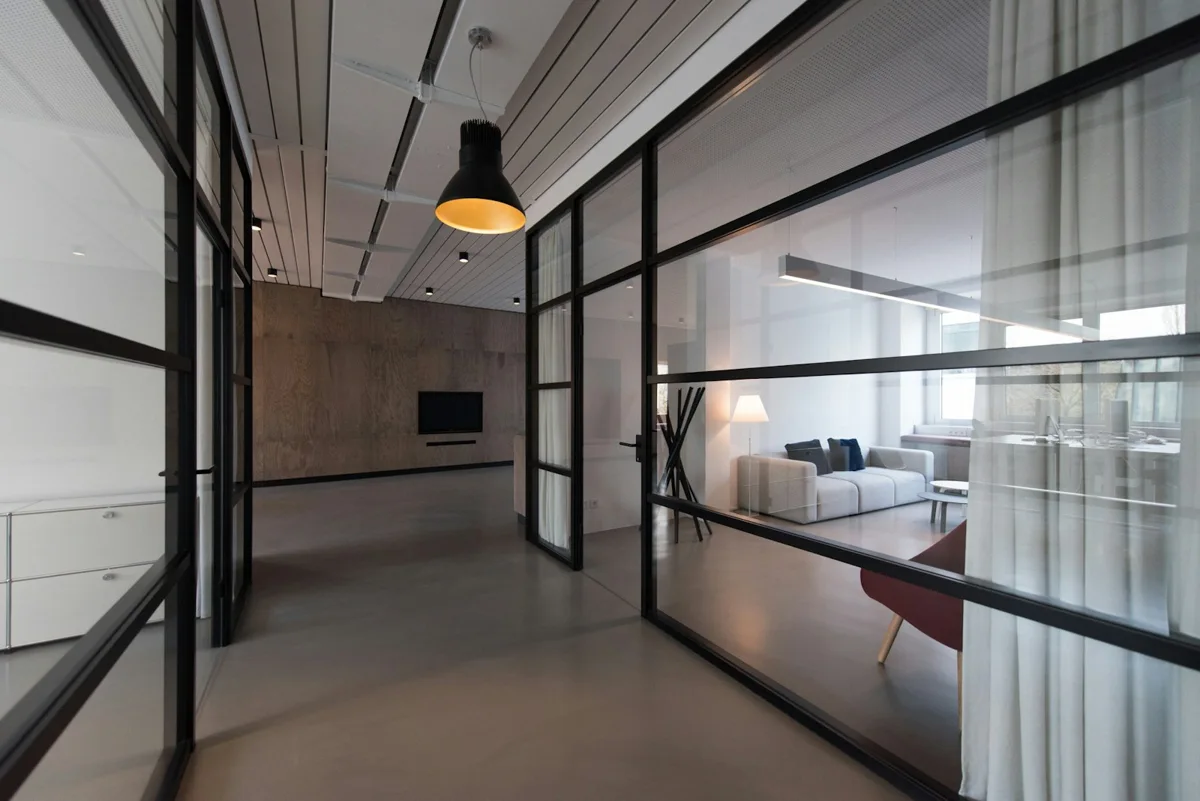
Reception areas, meeting rooms, desks and shared facilities have different patterns of use. We agree on access, desk handling, recurring tasks and detail work so the cleaning supports your working day.
Our team has been fully trained on medical cleaning procedures. We work with you to define the rooms, surfaces, products and cleaning procedures for your facility. We also agree on any terminal cleaning or other specialist services your facility needs.
Production schedules, site rules and restricted equipment affect how work is planned. We distinguish offices and employee break areas from production spaces, and agree on equipment boundaries and specialist tasks before service starts.
Cleaning needs to fit occupied hours, events and access requirements. We identify classrooms or activity areas, restrooms, shared surfaces and periodic tasks, then agree on when each part of the building can be serviced.
Your Cleveland program has a line of responsibility from the work on site to account oversight. A checklist defines the work. Inspections and communication help keep it on track.
Lower turnover than the competition.
More continuity in the team learning your facility.
Local building leads support on-site accountability. Facility-specific checklists give the cleaning team a repeatable process and make agreed responsibilities clear.
Your area manager is your point of contact for concerns, changes and account coordination. Issues should reach a responsible person rather than remain an unresolved note.
Field managers conduct scored inspections every six weeks. Where work falls below the required standard, follow-up becomes more frequent and the team receives support to correct it.
Through Swept, clients can communicate with the cleaning team and review inspection information. GPS-based clock-in and clock-out records help confirm attendance; inspections assess the work itself.
Review findings with your area manager and identify what needs follow-up. Reports give the conversation a concrete starting point.
Our reporting cycle brings together recent updates and inspection reports. It is separate from the monthly inspection schedule, with communication preferences discussed for your account.
Start- and end-of-shift notifications can be enabled if useful to your team. We agree on the contacts and updates you want to receive.
Switching providers should leave you with a clear plan. We work through the details before your new team starts.
Review spaces, priorities, recurring problems, operating hours and any periodic work.
List tasks, frequency, supplies, exclusions and any initial deep-clean arrangements in the proposal.
Document access and closing procedures, site restrictions, cleaning checklists and contacts.
Coordinate the start date, put the checklist into use, and review delivery through inspection and feedback.
A monthly figure alone does not show whether two proposals cover the same work. Use the walkthrough to establish the requirements, then compare task lists and frequency alongside price.
Tell us where your facility is and what needs to work better. We’ll use the walkthrough to discuss access, frequency, scope and communication.
Our teams also serve Akron, Canton, North Canton and Columbus, with operations across Northeast, Northwest and Central Ohio. If your portfolio crosses regions, we can discuss common reporting and account coordination while keeping each site’s scope specific.
Explore our Ohio coverage ↗Scope, pricing, access and communication—before you select a provider.
We build the scope around your facility. Recurring tasks can include trash removal, floor cleaning, restroom cleaning and restocking, breakroom care, and agreed touchpoint cleaning. Detail work and periodic services are listed separately so your proposal makes clear what is included and how often it is done.
We discuss occupancy, operating hours, visitor traffic, restrooms, floor types and the way each space is used. A busy entryway may need a different schedule from a private office. The walkthrough helps us set task frequencies by area rather than apply one schedule to every room.
We discuss the service window during the walkthrough and plan access and closing procedures with your team. Evening cleaning, daytime support and other arrangements depend on the agreed scope and staffing plan. We also identify who to contact when work takes place outside normal office hours.
Yes. Our checklist distinguishes limited service, full service and special-request tasks. Both options cover agreed routine work. Full service adds selected detail work, such as additional surface dusting and high-touch cleaning. The proposal identifies the tasks and frequency for your building; the plan name alone does not define every inclusion.
Restocking tasks and purchasing consumable supplies are separate scope decisions. We agree on who provides paper products, liners, soap and other consumables, where they are stored, and how replenishment is handled. Your proposal should make both responsibilities clear.
Our field managers inspect and score the work. The operating process uses regular inspections every six weeks, with more frequent follow-up where standards need attention. Inspection findings guide team support and corrective work. Client reports give you a record to review with your area manager.
Your area manager is your main contact. Client access through Swept also supports messages to the cleaning team and inspection reporting. Tell us the location and issue so it can be assigned and followed up. A recurring scope change should be reflected in the checklist and proposal, not left as an informal instruction.
Onboarding covers keys, access cards, entry instructions, restricted spaces and closing procedures. Our process includes tracking issued keys and cards, using anonymous key labels, and following your site instructions for securing the facility. We agree on access requirements before the first service.
Yes. Clean Facility has teams and active engagements in Cleveland, Akron, Canton, North Canton, Columbus and across Northeast, Northwest and Central Ohio. We can discuss shared reporting and account coordination while defining the tasks and schedule separately for each facility.
Price depends on cleanable area, visit frequency, occupancy, restroom count, floor types, access, supplies and periodic or specialist work. A walkthrough establishes those requirements. Comparing bids is easier when each proposal uses the same task list and frequency, rather than just a monthly total.
Yes. These environments need a scope that addresses their specific access, scheduling and cleaning requirements. We discuss production boundaries, sensitive equipment, approved products and restricted areas as applicable. Specialist tasks, including terminal cleaning or data-room work, must be included explicitly rather than assumed to be part of routine cleaning.
We walk the facility, agree on scope, document access and priorities, prepare the cleaning checklist, and establish contacts and reporting. We then coordinate the start date and team handover. Your proposal sets out any initial deep clean and its scope so both teams know what to expect.
Yes. Professional office buildings, apartment communities, medical spas and other Class A properties are the bulk of our Cleveland work. We also serve every other facility type in the market.
Yes. We hold Airport Security Coordinator credentials and SIDA clearance and can perform all of our standard cleaning and janitorial functions in the terminal, on the security side and airside. We do not perform runway decontamination.
Six years in the Cleveland market, as part of an Ohio company operating since 1993.
Every six weeks, on a 92-point checklist scored against your agreed scope. In July 2026 our nine scored inspections averaged 96.67 out of 100.
Recurring programs start at $1,000 per month. One-off projects such as floor restoration or post-construction cleaning are quoted on their own.
Tell us a little about your facility. We’ll discuss your needs, walk the space and define the scope.
Share your building type, location and cleaning needs. We’ll take it from there.
Request a walkthrough ↗Our Cleveland work leans toward professional office buildings, medical spas, apartment communities and other Class A properties. Those buildings are judged by their public face. A lobby, elevator cab, interior glass panel or amenity floor is inspected by every resident, tenant and visitor who walks through it, every day.
That changes where the hours go. A Class A program puts more time into entrances, glass, elevator tracks, restrooms and amenity space, and less into square footage nobody sees. A medical spa adds treatment-room turnover, clinical surfaces and a schedule that has to fit between appointments rather than around them. We set those priorities at the walkthrough instead of applying an office template to a building that is not an office.
Clean Facility has served the Cleveland market for six years and runs every shift here, including overnight and weekend coverage.
Office and Class A cleaning · Medical and clinical spaces · Interior glass and window cleaning · Daytime lobby and amenity coverage
Clean Facility holds Airport Security Coordinator and SIDA clearance at Cleveland Hopkins International Airport. That allows our teams to perform all of our standard cleaning and janitorial functions inside the sterile area, anywhere in the terminal and on the security side or airside.
The clearance matters beyond the airport itself. It means our staff are already screened, badged and trained to work under an access-controlled security program with escort rules, restricted zones and audited entry. A Cleveland data center, hospital wing, bank operations floor or secure records room asks for the same discipline. We do not perform runway decontamination.
Airport and terminal cleaning · Secure and access-controlled facilities · How our teams are trained and screened
Every account is inspected on a 92-point checklist on a six-week cycle. In July 2026, nine scored inspections averaged 96.67 out of 100 and company attendance was 95.45 percent.
The inspection is scored against your scope, not a generic standard, so an excluded task is not counted as a failure and a periodic task is not marked missing in a week it was not due. Where a score falls, the follow-up identifies the cause and checks become more frequent until it recovers. GPS clock-in and clock-out records confirm attendance; they are read alongside the inspection, never in place of it. A team can be in a building without completing a particular task.
Our recurring programs start at $1,000 per month. Smaller one-off projects are quoted separately.
What an inspection covers · What changes the cost of a program