
Office cleaning
An office should be ready for the people who use it, from the first arrival to the last meeting. Our Ohio teams build the service around your facility.
Request a walkthrough ↗Read more ↓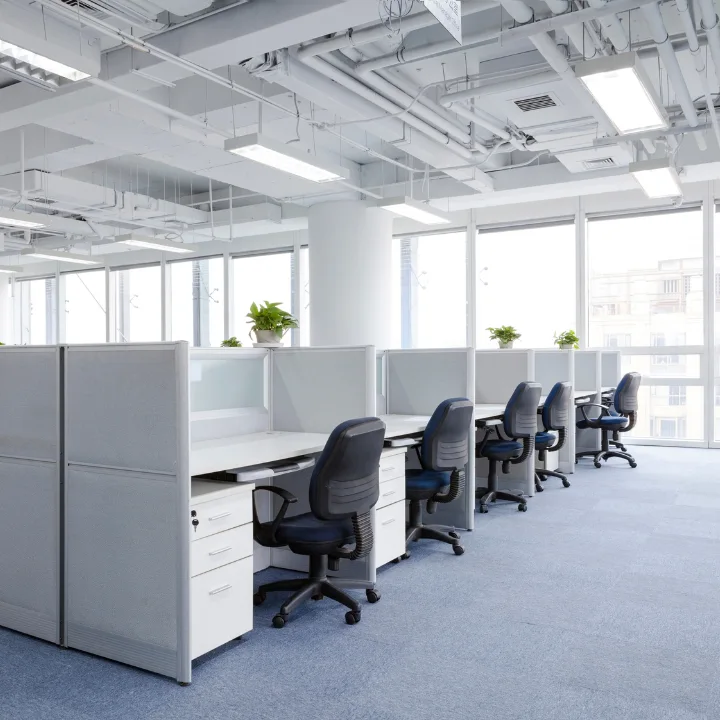
The workday sets the schedule
Some offices empty at five. Others have late meetings, hybrid schedules or staff arriving before dawn. We plan cleaning around those hours and the areas people actually use. A half-empty desk floor can still have busy restrooms, a heavily used kitchen and meeting rooms that need daily attention.
During the walkthrough, identify occupied desks, shared workstations, reception, conference rooms and private offices. Agree on what may be moved and which surfaces should be left alone. Cleaning a desk should not mean rearranging documents or handling personal items.
Give shared spaces their own plan
Breakrooms and restrooms often generate the most complaints because many people use them throughout the day. Nightly cleaning may be enough for one office, while another needs a daytime check and supply replenishment. A day porter can support those needs when included in the program.
Reception and meeting rooms need attention that reflects visitor traffic. Interior glass, entrance flooring, touchpoints and visible waste can affect the first impression even when the rest of the office is quiet. We include the agreed tasks in the facility checklist rather than leaving them as general expectations.
Separate routine work from periodic care
Vacuuming and routine hard-floor cleaning do not replace carpet extraction or restorative floor work. These services need their own schedule, method and access window. We can discuss periodic projects alongside the recurring program so they do not depend on someone noticing that the floor has already deteriorated.
The same applies to high surfaces, detailed furniture cleaning and interior windows. Identify what is included, how often it will be done and whether desks or furniture need to move. Clear responsibilities make the work easier to schedule.
A contact who can act on a concern
Your area manager coordinates changes and service concerns. If a room changes use, a department moves or attendance increases, the cleaning plan should follow. Tell us what changed so we can review time, tasks and frequency.
For offices spread across Ohio, we can coordinate the account while keeping each location’s checklist specific. Comparable reporting is useful; identical task lists are less useful when the buildings have different needs.
Build the task list by area
These are planning examples. The agreed scope identifies the tasks assigned to our team and the tasks retained by your staff.
| Area or service window | Cleaning scope | Key handover detail |
|---|---|---|
| Workstations | Clear-surface cleaning | Papers and personal items remain undisturbed |
| Shared rooms | Breakroom, meeting-room and restroom tasks | Set frequency by use |
| Entrances | Floor and glass care | Coordinate with occupied hours |
Your questions,
answered.
Can you clean after business hours?
We discuss evening, overnight and other service windows during the walkthrough. The agreed schedule must allow safe access and enough time to complete the work.
Do you clean occupied desks?
Desk cleaning boundaries are agreed with you. We establish what may be moved, which surfaces are included and where documents or personal belongings must remain untouched.
Can you restock restroom supplies?
Restocking can be included. The proposal should identify the products, storage location, purchasing responsibility and checks required.
Let’s put a better
plan in place.
Tell us about your facility. We’ll discuss your needs, walk the space and define the scope.
A clear scope starts
with a conversation.
Share your building type, location and cleaning needs.
Request a walkthrough ↗